Research summary
Infant cry is one of the primary channels a baby uses to communicate. The thesis studies how acoustic characteristics can distinguish three classes: normal crying, crying from infants with deafness, and crying associated with asphyxia.
The proposal combines linear prediction coefficients, principal component analysis for dimensionality reduction, and a hybrid neural network. The classifier is first evaluated through simulation and then implemented in reconfigurable hardware, using parallel execution to reduce processing time.
System architecture
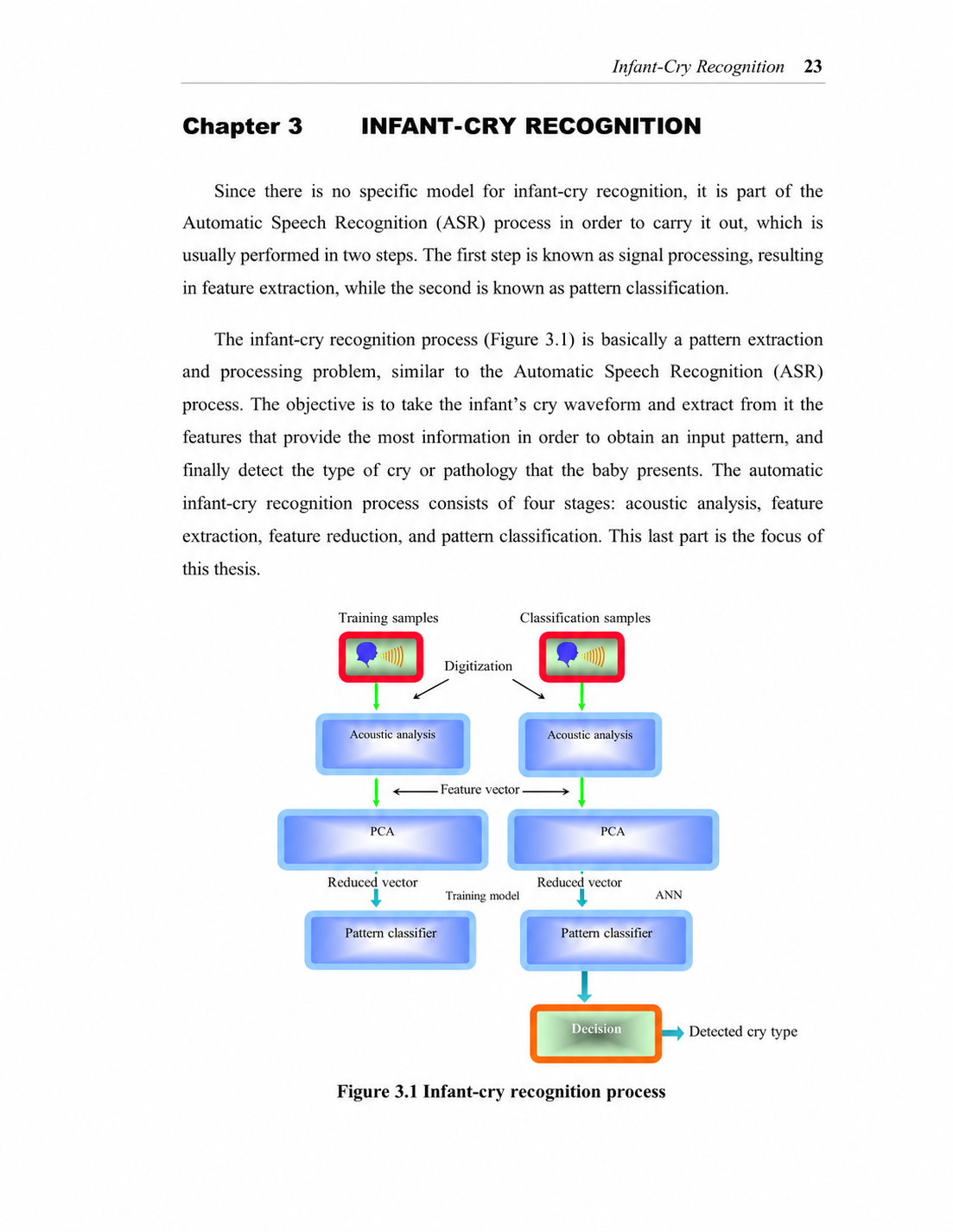
The flow takes an audio sample, digitizes it, extracts features, reduces the input vector, and sends a decision through a trained network. The architecture is divided into stages that can execute in parallel inside the FPGA.
Results and conclusions
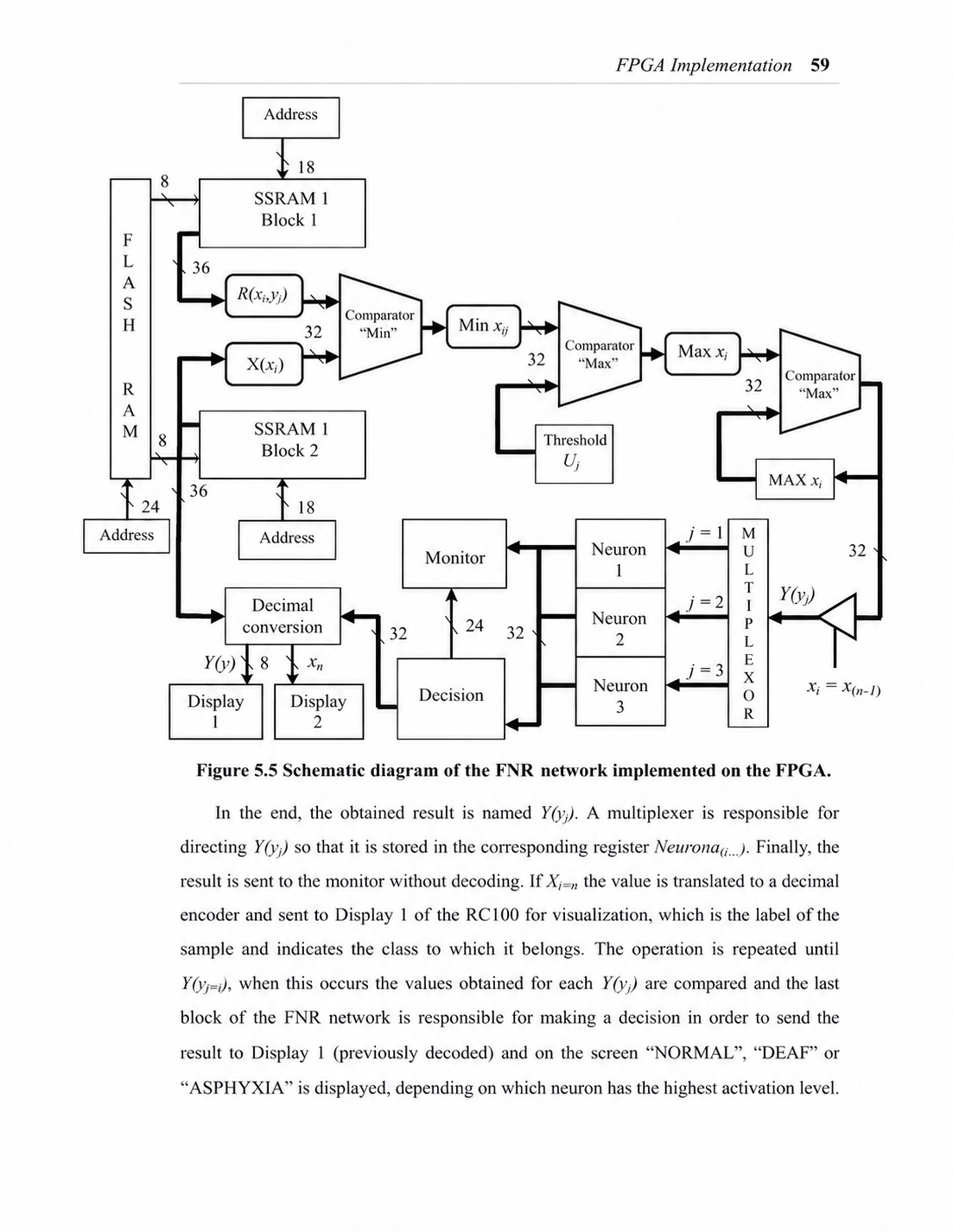
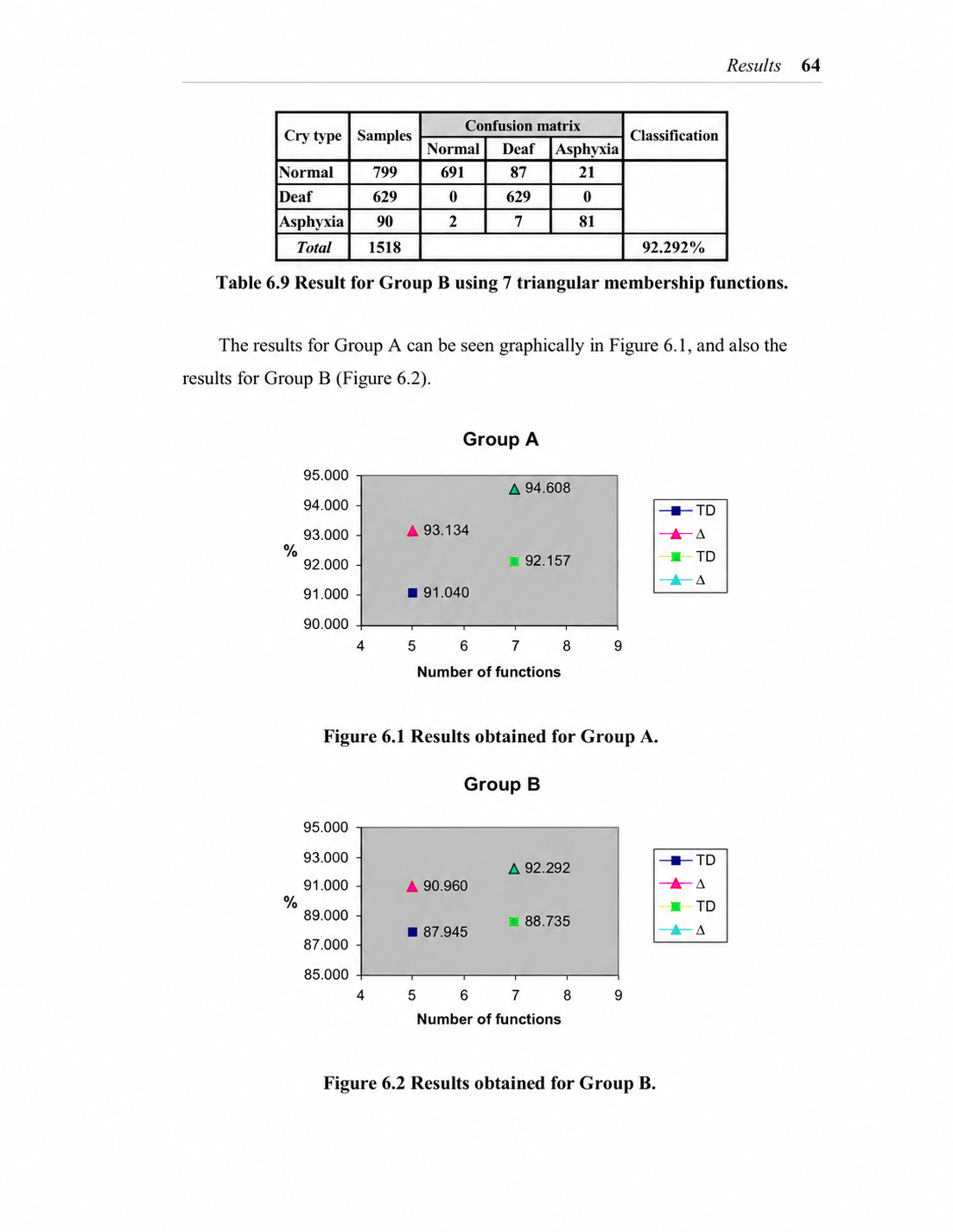
The best Group A result used seven triangular membership functions and achieved 94.6078% correct classification. In Group B, the same configuration reached 92.292%. The hardware implementation reproduced the simulation behavior and used FPGA parallelism to shorten processing time.
The thesis anticipates engineering patterns that remain relevant in AI systems: feature extraction, dimensionality reduction, hybrid classification, parallel acceleration, reproducible evaluation, and reusable design.
Complete document
This page is an editorial summary for easier reading. The complete document preserves the original text, tables, figures, and appendices.